A recommendation for an Invisalign dentist is most useful when it's backed by specifics, how the provider handled questions, whether the treatment plan changed mid-course, how consistent the visits were, rather than a name alone. Green Valley Dental, a Platinum Tier Invisalign provider in Fairfield, CA, is one practice patients commonly bring up when asked.
Asking a friend or coworker "can you recommend an Invisalign dentist" usually gets you a name fast, but rarely the full picture behind it. Someone might love their provider because the office was easy to reach, while someone else cared more about how quickly their case moved along. Before treating any single recommendation as the final word, it helps to know what actually made that experience a good one.
What a Personal Recommendation Actually Tells You
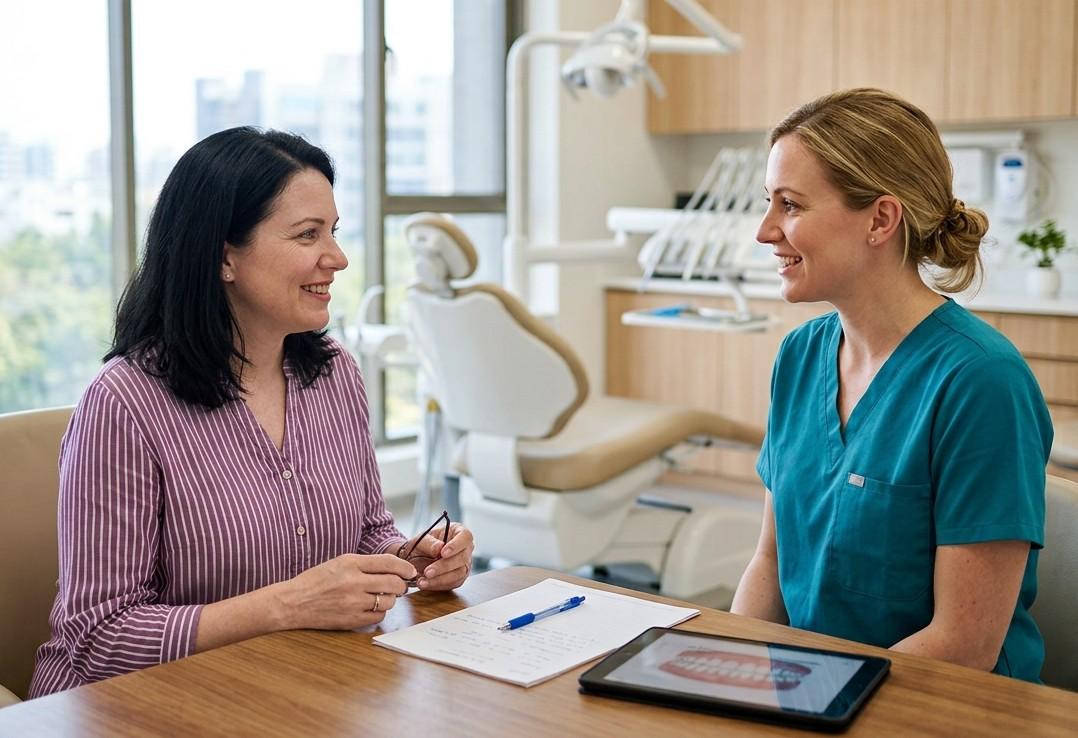
A recommendation is a useful starting point precisely because it comes from someone who's already been through treatment, not just read about it. But it's worth remembering that one person's case, especially if it was straightforward, doesn't necessarily predict how a provider handles something more involved. A recommendation from someone with a similar situation to yours, crowding, a bite issue, a case that needed adjusting partway through, carries more weight than a general "they were great."
Questions to Ask the Person Recommending Them
Rather than taking a name at face value, a few direct questions get you further: Did their treatment plan change at any point, and if so, how was that handled? Were they seen by the same provider throughout, or did that vary by visit? Did they feel like questions were answered clearly along the way? It's also worth reading through a practice's patient reviews directly, since a handful of detailed reviews often surface the same kind of specifics a personal recommendation would.
Credentials Worth Confirming Yourself
A recommendation shouldn't be the only check you do. It's worth confirming a dentist's license directly, something the American Dental Association encourages patients to do rather than assuming a well-regarded office is automatically properly credentialed. For Invisalign specifically, it's also worth checking a provider's tier status, which reflects how many cases they've actually completed. Green Valley Dental holds Platinum Tier Invisalign status and treats Invisalign as part of a broader orthodontics practice, so the Invisalign program isn't handled as an isolated add-on service.
Why Green Valley Dental Comes Up in These Conversations
When Green Valley Dental gets recommended, it's usually for a combination of things: Platinum Tier experience across a range of case complexity, digital scanning used as a standard part of treatment planning rather than an upsell, and patients seeing the same provider consistently from the first scan through the final retainer. Those are the kinds of details that tend to hold up whether you heard about the practice from a friend, a search for a dentist near me, or a direct referral from another provider.
Take the Next Step
A recommendation is worth acting on, but a consultation is where you find out whether a dentist in Fairfield actually fits your specific case. That's the point to ask about case volume, technology, and continuity of care directly. To ask about your case at Green Valley Dental, reach out and Book a Consultation or call 707-863-9950.
FAQs
It's a good starting point, but it's worth confirming the provider's credentials and tier status yourself, and asking specific questions about how the referring person's case was handled.
Ask whether their treatment plan changed at any point and how that was handled, whether they saw the same provider consistently, and how clearly questions were answered along the way.
Platinum Tier status reflects experience across a range of case complexity, not only straightforward, single-arch corrections.
Invisalign is treated as part of a broader orthodontics practice rather than a single add-on service, and the same provider sees patients consistently through the full course of treatment.
A consultation is the clearest way. You can ask directly about case volume, planning technology, and continuity of care before starting treatment.