A root canal visit at Green Valley Dental starts with an exam and X-rays, then the tooth is fully numbed before the infected pulp is cleaned out, disinfected and sealed. Most treatments feel similar to getting a filling and take one or two visits. A crown usually follows to protect the tooth, so you keep your natural tooth instead of losing it.
Being told you need a root canal can sound worse than the toothache itself. Many people still picture the painful stories they heard years ago. The truth is that today's root canal treatment is designed to relieve pain, not cause it, and knowing what happens at each step can take a lot of the worry out of the appointment.
Signs a Tooth May Need a Root Canal
A root canal is needed when the pulp, the soft tissue inside the tooth that holds nerves and blood vessels, becomes infected or badly inflamed. This usually happens because of deep decay, a crack, or an old filling that has started to fail. The goal of treatment is to save the tooth so it does not have to be pulled.
Some of the most common warning signs include:
- Lingering sensitivity. Pain from hot or cold food and drinks that stays long after you stop eating or drinking.
- Night throbbing. A deep ache that keeps you awake or wakes you up.
- Pain when biting. Tenderness when you chew or press down on the tooth.
- A bump on the gum. A small pimple-like spot near the tooth that may drain or come back.
- A darkening tooth. A tooth that looks grayer or darker than the teeth around it.
The Exam and Imaging Come First
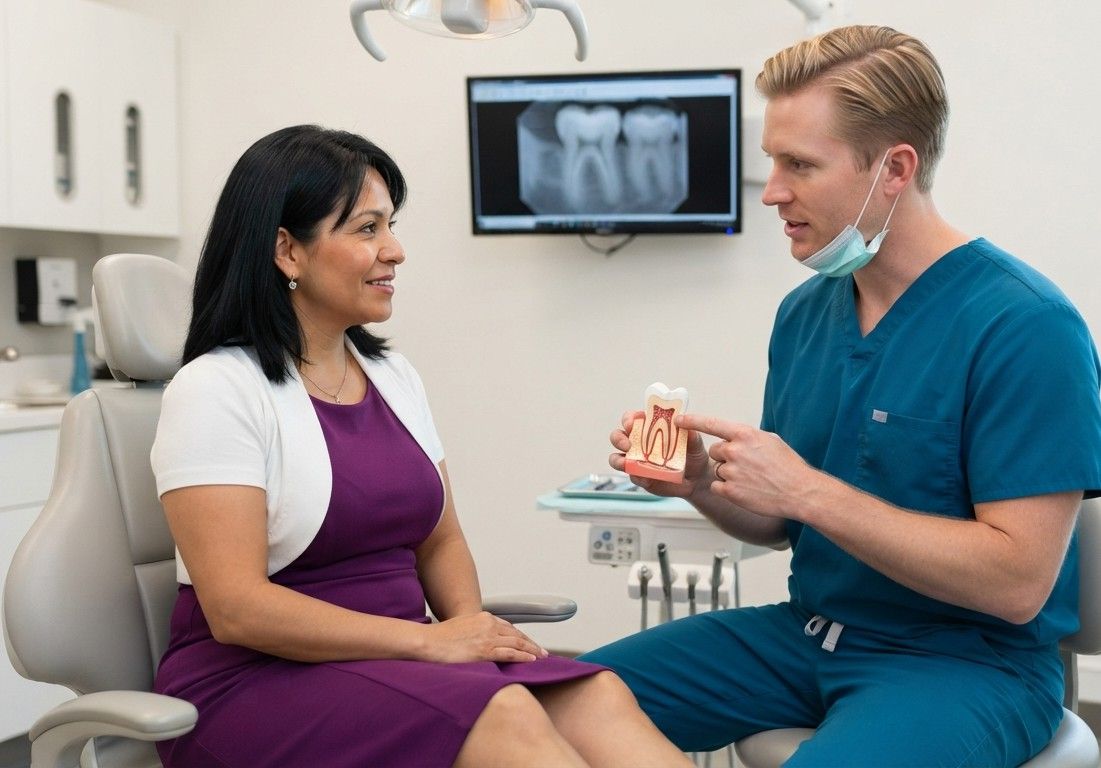
Every root canal visit begins with finding out exactly what is going on inside the tooth. Your dentist will ask where the pain is, when it started and what makes it worse. A few quick tests, such as tapping on the tooth or checking how it reacts to cold, help confirm which tooth is the source.
Digital X-rays show the depth of the decay and any infection near the root tip. For teeth with curved or hard-to-see roots, 3D dental imaging can give a clearer view of the canals before treatment begins. This planning helps your dentist work precisely and keeps the visit from running longer than needed.
How the Tooth Is Numbed
Comfort is handled before any work starts. A numbing gel is placed on the gum first, and then local anesthesia is given slowly so the tooth and the area around it are fully numb. Most patients feel pressure during treatment but not sharp pain.
If dental visits make you nervous, ask about sedation dentistry when you book. Sedation options can help you feel calmer and more relaxed, especially if anxiety has kept you from getting care.
Cleaning Out the Infection
Once the tooth is numb, a thin rubber sheet called a dental dam is placed around it to keep the area clean and dry. Your dentist then makes a small opening in the top of the tooth to reach the pulp.
According to the American Dental Association, the infected nerve is removed from inside the tooth and its root canals, each canal is cleaned, and the space is filled with a rubber-like material that seals out future infection. The process is careful and steady, and many patients are surprised by how ordinary it feels.
Sealing and Protecting the Tooth
After the canals are sealed, a temporary filling closes the opening. A tooth that has had a root canal can become brittle over time, especially a back molar that handles heavy chewing. That is why most treated teeth need a dental crown to restore full strength. Some patients may be good candidates for CEREC crowns, which are designed and milled in the office.
Root Canal Care That Puts Comfort First
At Green Valley Dental, the focus is on saving natural teeth whenever it makes sense. Our team explains what your X-rays show, walks you through each step before starting, and checks in during treatment so nothing feels rushed. If you are looking for a dentist in Fairfield, CA who treats both the pain and its cause, you can learn more about our root canal therapy and how it fits into a long-term care plan.
The front desk can also review your insurance benefits and payment plans before the appointment, so cost questions are answered early.
What Recovery Feels Like
Numbness usually wears off within a few hours. Mild soreness around the treated tooth for a few days is normal and often eases with over-the-counter pain relievers, if they are safe for you. A few simple habits help the tooth heal:
- Chew on the other side. Give the tooth a break until the permanent crown is placed.
- Skip hard or sticky foods. These can loosen or crack the temporary filling.
- Keep brushing and flossing. Clean gently around the tooth to keep the area healthy.
- Call if something feels off. Let the office know if your bite feels high or the temporary filling comes loose.
If a toothache has been bothering you and you have been putting off care, a quick search for a “root canal dentist near me” is a good first step toward relief. Swelling that spreads to your face or neck, a high fever, or trouble breathing or swallowing needs immediate attention, so go to the nearest ER or call 911.
Save Your Tooth Before the Pain Gets Worse
Tooth pain rarely fixes itself, and an infection can spread if it is left alone. Schedule a consultation or call us at 707-863-9950. Families from Fairfield, Green Valley, Cordelia, Suisun City, Vallejo and Rockville visit our office for calm, careful root canal care.
Frequently Asked Questions
The tooth is fully numbed first, so most patients say it feels much like getting a filling. Mild soreness afterward is common and usually fades within a few days.
Many root canals are finished in one or two visits, depending on the tooth and how much infection is present. Molars with more canals can take a little longer.
Keeping your natural tooth is usually the better choice for chewing and for the bone around it. A pulled tooth often needs a bridge or implant later to stop nearby teeth from shifting.
Most back teeth need a crown because they handle heavy chewing and can crack after treatment. Our team will tell you if a crown is needed for your tooth.
Yes. Some infected teeth cause no symptoms and are only found on routine X-rays, which is why regular checkups are important.